Strong web decisions come from connecting business goals, user needs and technical constraints. The following framework is designed to help teams make that connection before investing more time or budget.
Choose based on the operating model
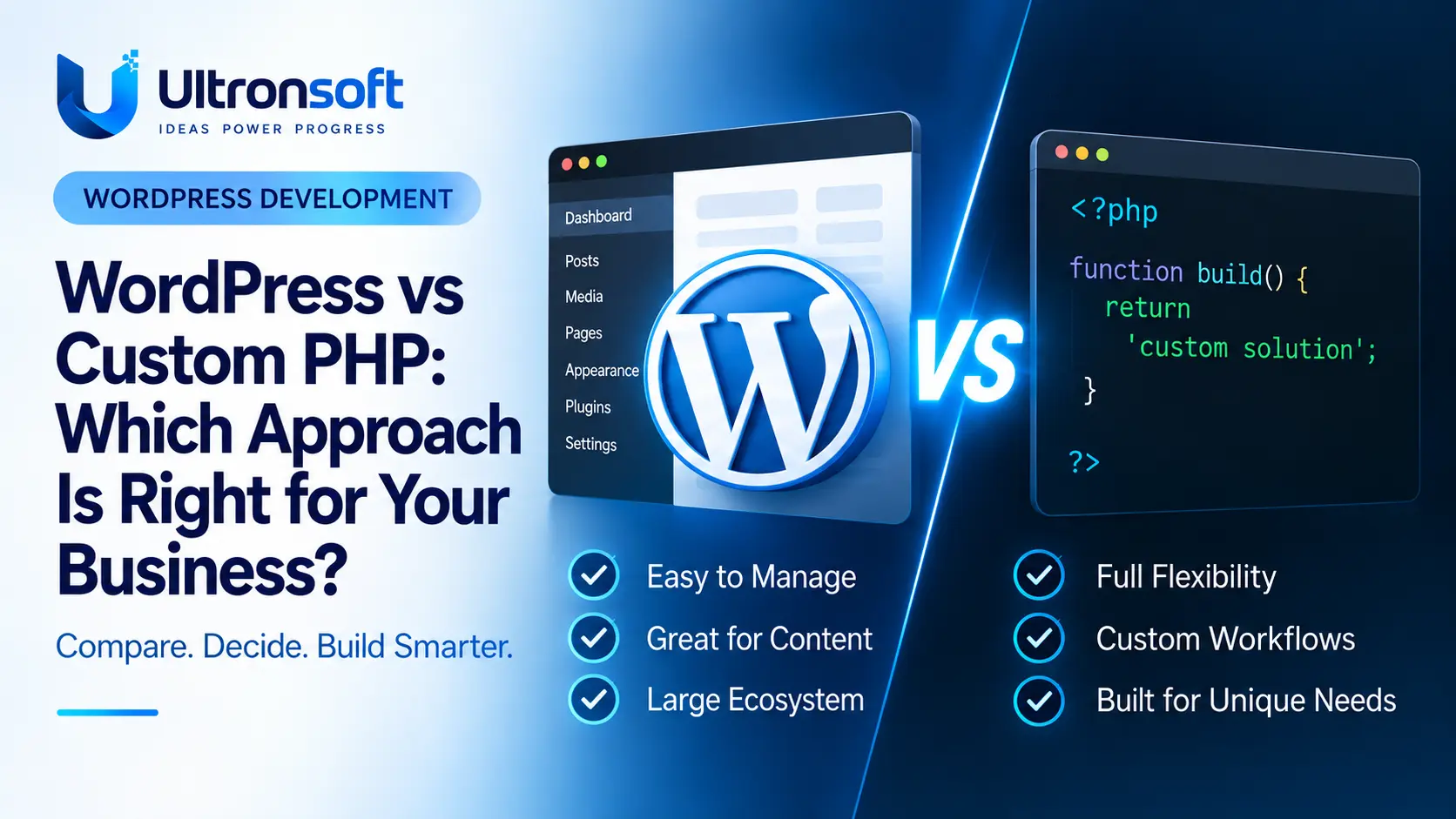
WordPress is a strong fit when marketing teams need to publish pages and articles regularly. Custom PHP is often better when the product has unique workflows, data models or application logic that does not fit a typical CMS.
WordPress is strongest when content changes often
A well-built WordPress site gives non-technical teams control over content while preserving reusable templates and brand consistency. The biggest risks come from unnecessary plugins, poor hosting and inconsistent page-builder practices.
Custom PHP gives deeper technical control
Custom development allows precise control over routing, permissions, data processing and integrations. It can be more efficient for purpose-built portals or web applications, but it requires disciplined development and ongoing technical ownership.
A hybrid approach is often practical
Many organisations use WordPress for marketing content and a custom application for logged-in workflows. The right architecture should reduce operational friction rather than force one technology everywhere.
What to do next
Translate the recommendations into a short action list: what should change now, what should be measured, and what can wait. If the work requires design or development support, define the desired outcome before choosing the implementation approach.
Related service
WordPress Development
Flexible WordPress websites that are easy to manage, fast to load and ready to scale.
Explore WordPress Development →