
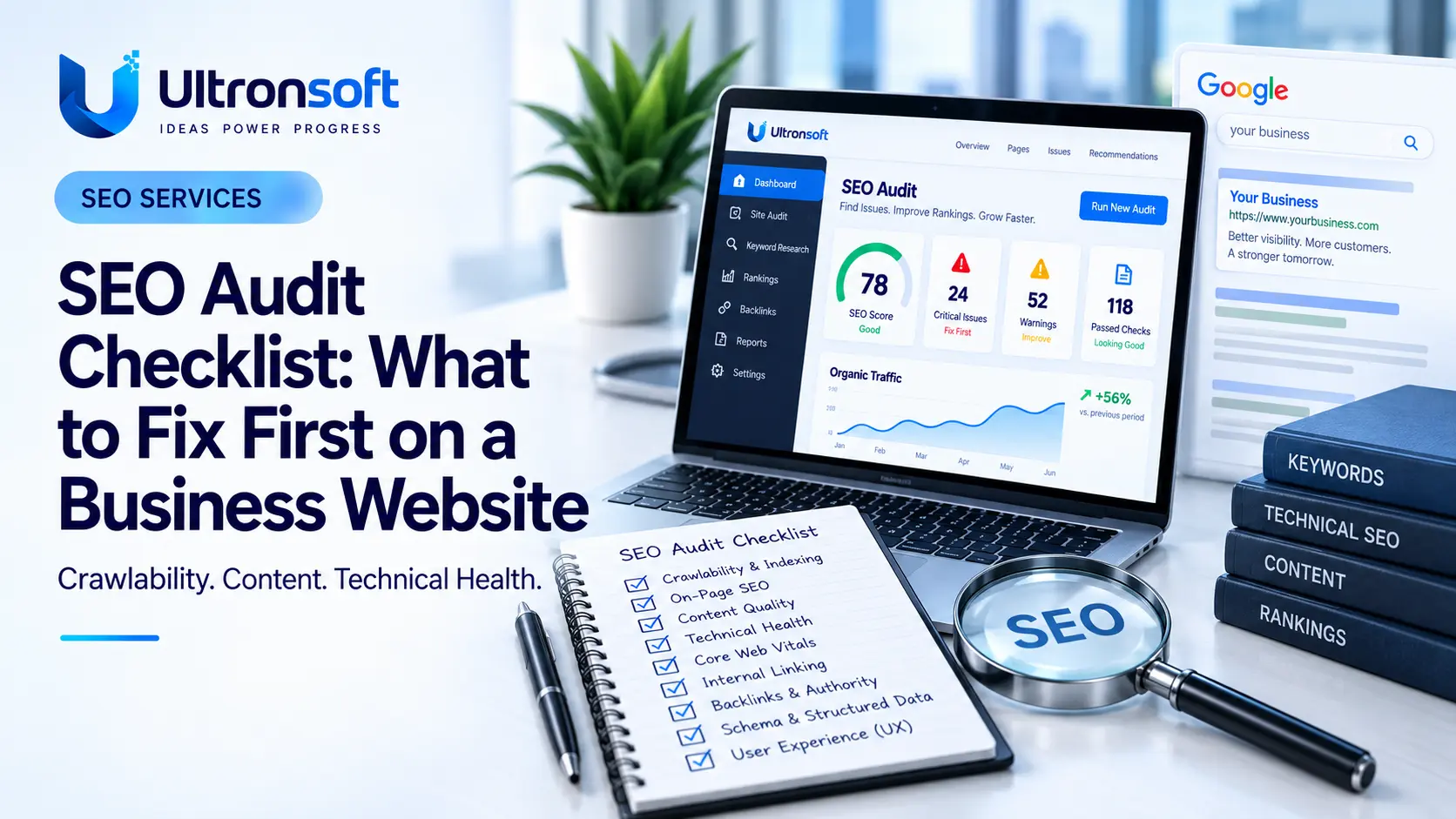
Strong web decisions come from connecting business goals, user needs and technical constraints. The following framework is designed to help teams make that connection before investing more time or budget.
Confirm that important pages can be discovered and indexed
Start with crawlability, robots directives, canonical URLs, sitemap coverage and index status. Search growth is difficult when the correct service and commercial pages are blocked, duplicated or sending conflicting signals.
Map one clear search intent to each important page
Every service page should have a primary purpose and a focused search topic. Avoid creating multiple thin pages that compete for the same query. Strengthen the page that best satisfies the buyer intent and support it with related articles.
Improve on-page structure before adding more content
Review titles, descriptions, headings, descriptive anchors, image alternatives, FAQs and calls to action. Strong structure makes the page easier for users, search engines and answer systems to understand.
Use technical SEO, GEO and AEO together
Structured data, entity clarity, concise definitions, source-backed expertise and useful question-led sections can support both traditional search and generative discovery. The goal is not to optimize for a single platform, but to make the business and its expertise unambiguous.
What to do next
Translate the recommendations into a short action list: what should change now, what should be measured, and what can wait. If the work requires design or development support, define the desired outcome before choosing the implementation approach.
Related service
SEO Services
Technical, on-page and content SEO designed to improve qualified organic visibility and search performance.
Explore SEO Services →