
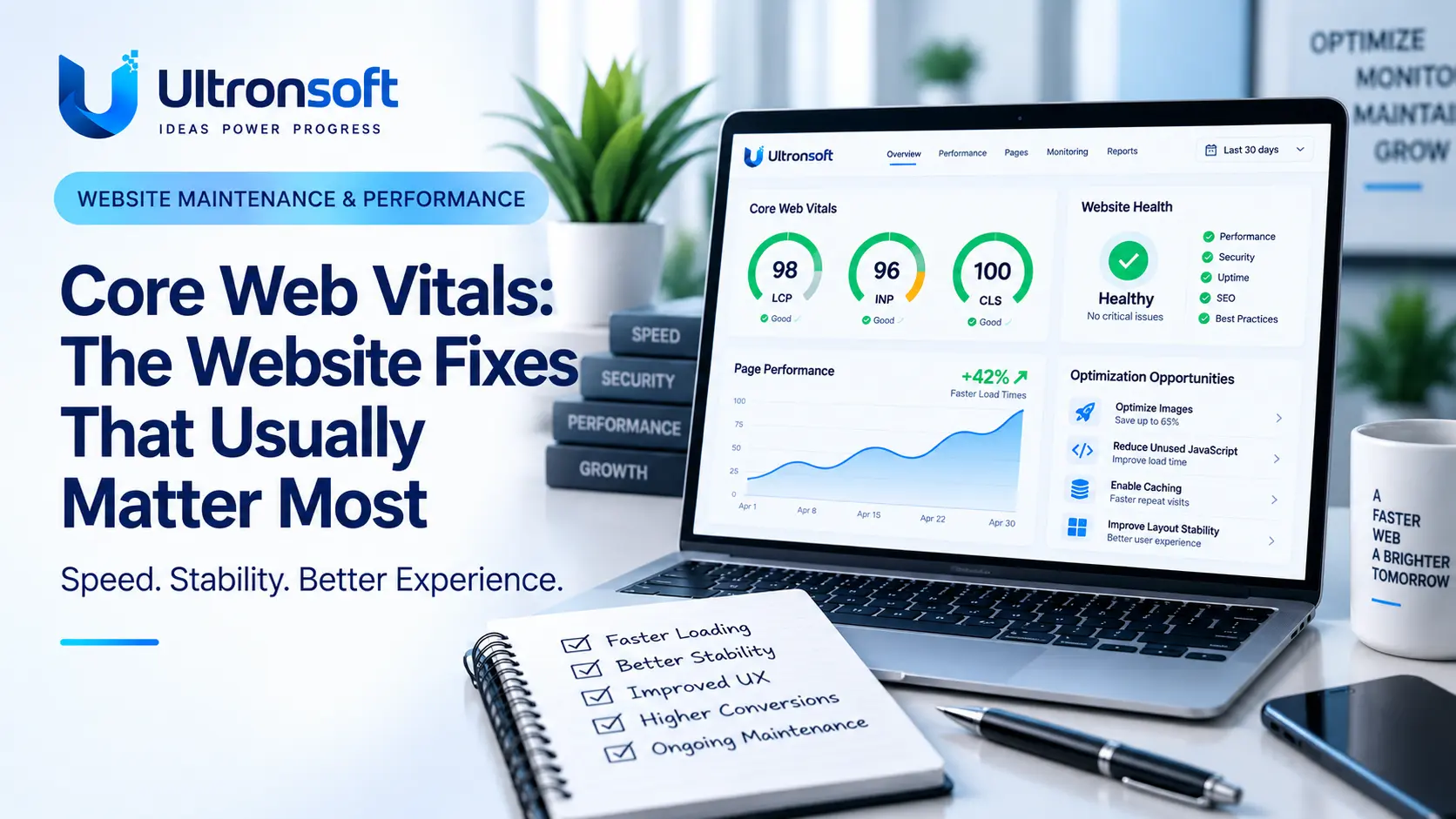
Strong web decisions come from connecting business goals, user needs and technical constraints. The following framework is designed to help teams make that connection before investing more time or budget.
Start with the actual bottleneck
Performance work is most effective when it is based on field data and page-level testing. Optimising every asset equally can waste time if one hero image, third-party script or server delay is responsible for most of the problem.
Improve LCP by prioritising critical content
Optimise the main visual, reduce server response time, preload truly critical resources and avoid loading large background media before the page needs it.
Improve INP by reducing main-thread work
Heavy JavaScript, excessive third-party widgets and large DOM trees can make interactions feel slow. Remove scripts that do not support a real business requirement.
Prevent layout shifts
Reserve space for images, embeds and dynamic banners. Avoid inserting content above visible elements after the page begins rendering.
What to do next
Translate the recommendations into a short action list: what should change now, what should be measured, and what can wait. If the work requires design or development support, define the desired outcome before choosing the implementation approach.
Related service
Maintenance & Performance
Ongoing technical care, speed improvement and website enhancements after launch.
Explore Maintenance & Performance →